Robotic Knee Replacement
Robotic Knee Replacement is a highly advanced surgical procedure that combines the expertise of an orthopedic surgeon with state-of-the-art robotic technology to provide exceptional precision during knee replacement surgery. This innovative approach helps improve implant positioning, enhances joint function, reduces pain, and supports faster recovery for patients suffering from severe knee arthritis and joint damage.
Whether you are struggling with chronic knee pain, stiffness, or limited mobility, robotic-assisted knee replacement can help restore movement and significantly improve your quality of life.
What is Robotic Knee Replacement?
Robotic Knee Replacement is a computer-assisted surgical technique used during partial or total knee replacement procedures. The robotic system creates a detailed 3D model of the patient's knee, allowing the surgeon to plan the surgery with exceptional accuracy.
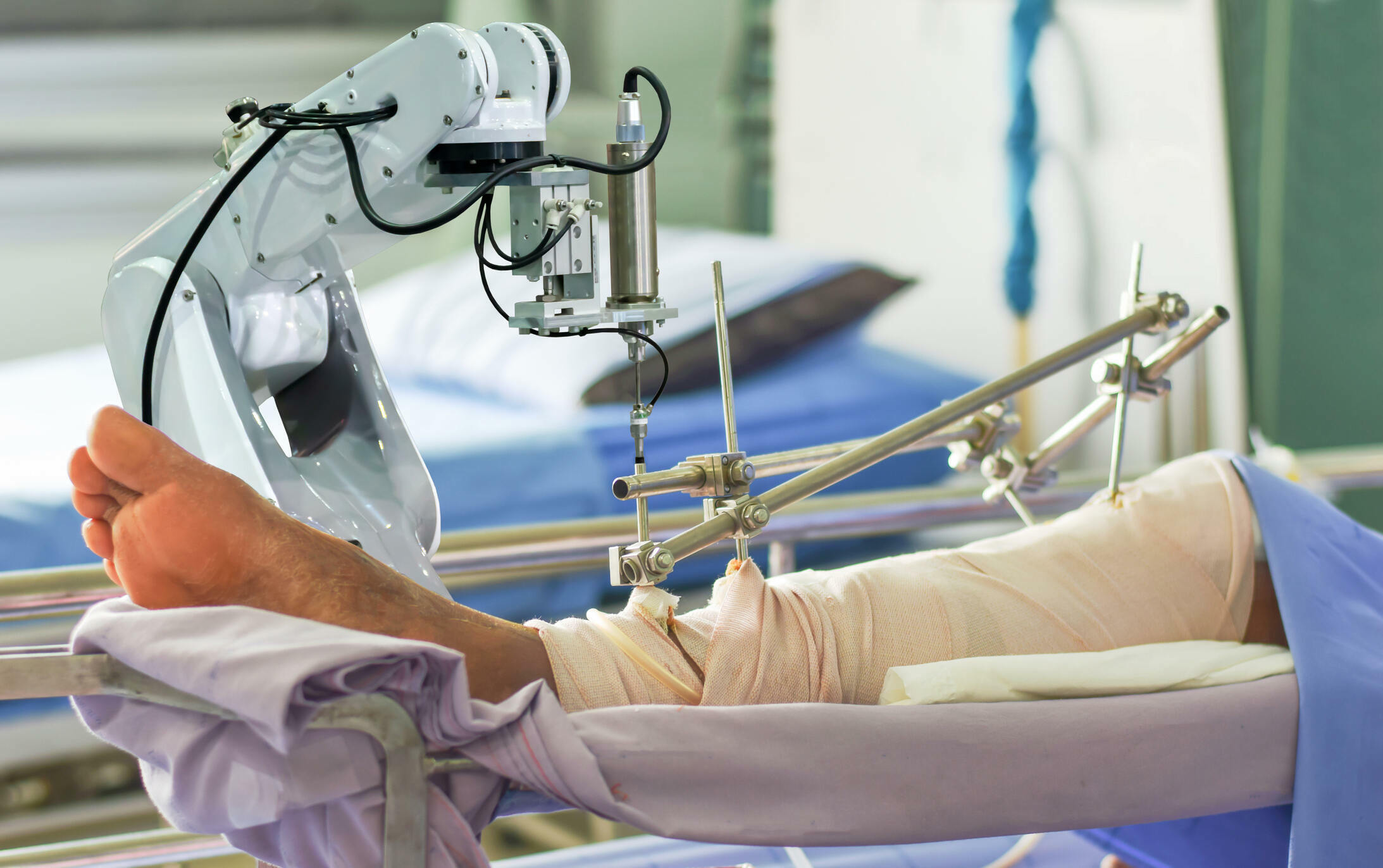
During the procedure, the robotic arm assists the surgeon in removing damaged bone and cartilage while ensuring precise placement of the artificial knee implant. The surgeon remains in complete control throughout the surgery, while the robotic technology enhances accuracy and consistency.
Who Needs Robotic Knee Replacement?
Robotic knee replacement may be recommended for patients experiencing:
- Advanced osteoarthritis of the knee
- Rheumatoid arthritis
- Post-traumatic arthritis
- Severe knee pain affecting daily activities
- Difficulty walking, climbing stairs, or standing for long periods
- Knee deformities such as bow legs or knock knees
- Failure of conservative treatments like medications, injections, and physiotherapy
Conditions Treated with Robotic Knee Replacement
Knee Osteoarthritis
The most common reason for knee replacement surgery, causing cartilage wear, pain, and stiffness.
Rheumatoid Arthritis
An autoimmune condition that damages joint tissues and leads to severe knee dysfunction.
Degenerative Joint Disease
Progressive wear and tear of the knee joint resulting in chronic pain and limited mobility.
Post-Traumatic Arthritis
Joint damage caused by previous injuries, fractures, or ligament injuries.
Benefits of Robotic Knee Replacement
Robotic-assisted surgery offers several advantages over conventional knee replacement procedures:
Enhanced Precision
Advanced imaging and robotic guidance help achieve highly accurate implant placement.
Personalized Surgical Planning
Every procedure is customized according to the patient's unique anatomy.
Improved Joint Alignment
Better alignment may improve knee function and implant longevity.
Reduced Soft Tissue Damage
Precise surgical movements help preserve healthy tissues around the knee.
Less Postoperative Pain
Minimally invasive techniques often result in reduced pain and discomfort.
Faster Recovery
Many patients experience quicker rehabilitation and earlier return to daily activities.
Improved Implant Longevity
Accurate implant positioning may reduce wear and extend the lifespan of the prosthesis.
The Robotic Knee Replacement Procedure
Preoperative Assessment
A detailed evaluation is performed, including:
- Medical history review
- Physical examination
- X-rays and advanced imaging
- Blood investigations
- Surgical planning using robotic software
Surgical Procedure
- The patient is administered anesthesia.
- A small incision is made over the knee.
- The robotic system creates a real-time map of the knee.
- Damaged bone and cartilage are removed with precision.
- The artificial knee implant is accurately positioned.
- The surgeon verifies alignment and joint balance.
- The incision is closed, and recovery begins.
The procedure typically takes 1 to 2 hours, depending on the complexity of the case.
Recovery After Robotic Knee Replacement
Recovery is generally faster compared to traditional knee replacement surgery.
Immediate Recovery
- Standing and walking may begin within 24 hours.
- Pain management protocols help improve comfort.
- Physiotherapy starts early to restore movement.
First Few Weeks
- Improved mobility and reduced swelling.
- Gradual return to routine activities.
- Strengthening exercises for the knee joint.
Long-Term Recovery
Most patients can resume normal daily activities within 6 to 12 weeks, while complete recovery may take several months.
Why Choose Robotic-Assisted Knee Replacement?
Patients increasingly prefer robotic knee replacement because it offers:
- Greater surgical precision
- Customized treatment planning
- Better implant alignment
- Reduced risk of complications
- Faster rehabilitation
- Improved patient satisfaction
- Enhanced long-term outcomes
Risks and Complications
Like any surgical procedure, robotic knee replacement carries some risks, including:
- Infection
- Blood clots
- Implant loosening
- Nerve or blood vessel injury
- Knee stiffness
- Persistent pain
- Rare need for revision surgery
An experienced orthopedic surgeon takes extensive measures to minimize these risks and ensure optimal results.